
What is the role of sebaceous glands?
Anais BambiliWhat are sebaceous glands?
Sebaceous glands are small glands located in the skin of most mammals, including humans. They are primarily attached to hair follicles, forming what is known as the pilosebaceous unit. Their main role is the production and secretion of sebum, an oily substance that helps form the hydrolipidic film, a protective barrier on the skin's surface.
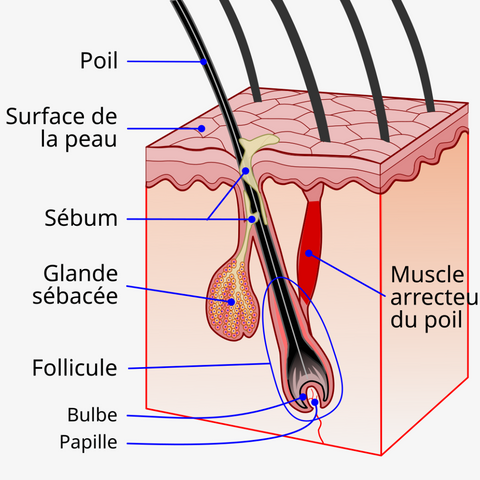
Where are sebaceous glands located?
Sebaceous glands are present all over the skin's surface, with the notable exception of the palms of the hands and the soles of the feet. They are particularly abundant on the scalp, face, and upper body, which explains why these areas can be more prone to issues like oily skin, acne, or oily hair.
What is the role of sebaceous glands?
1. Sebum Production
Sebum is an oily substance primarily made up of lipids, including free fatty acids, triglycerides, waxes, and squalene. Its production is regulated by the activity of the sebaceous glands, which are usually attached to hair follicles, forming what is known as the pilosebaceous unit. The excretory ducts of the sebaceous glands allow sebum to flow to the skin's surface and scalp, where it contributes to the formation and composition of the hydrolipidic film.
2. Skin Protection
This hydrolipidic film is a thin protective layer that covers the skin and hair. Its role is to protect the skin's surface from external aggressors (like bacteria and pollutants), prevent dehydration by limiting water evaporation, and maintain the skin's elasticity and suppleness. On the scalp, it also helps protect hair, preventing dryness and giving it a shiny, smooth appearance.
3. Hydration and Dehydration Prevention
The hydrolipidic film, partly made up of sebum, limits water evaporation from the skin's surface, thus helping to maintain its hydration. By retaining moisture, it helps prevent dehydration and keeps the skin supple and soft.
4. Maintaining Skin pH Balance
Sebum helps maintain a slightly acidic pH on the skin's surface, which is important for preventing the proliferation of harmful microorganisms. This acidic environment also helps protect the skin against infections.
5. Temperature Regulation and Skin Suppleness
By creating a thin layer of oil on the skin, sebum helps regulate body temperature and maintain skin suppleness. This flexibility is essential for the skin to adapt to body movements without cracking.
6. Hair and Scalp Lubrication
Sebum lubricates the hair and scalp, protecting them from dryness. It also helps prevent damage caused by environmental factors like wind, sun, and pollution. Thanks to this lubrication, hair remains shiny and less prone to breakage.
7. Contribution to Hair Follicle Health
Sebum nourishes and protects hair follicles, thus contributing to overall hair health. It plays an important role in the growth and maintenance of healthy hair.

8. Prevention of Skin Conditions
By creating a protective barrier and maintaining the skin's moisture balance, sebum helps prevent certain skin conditions such as dermatitis, eczema, and other irritations related to excessive skin dryness.
9. Response to Hormonal Stimuli
The production of sebum is strongly influenced by hormones, especially androgens. These hormones, like testosterone, stimulate the activity of the sebaceous glands, thereby increasing sebum production. This is why, during puberty, when androgen levels rise, the skin often becomes oilier and hair may appear shinier, or even greasy.
When there's an excessive production of sebum, often linked to sebaceous glands being overly sensitive to androgens, skin can become oily. This oily skin is often prone to various skin conditions, including blackheads and acne, which are caused by hair follicles getting blocked by a mix of oil and dead skin cells.
How to unclog sebaceous glands?
Unclogging sebaceous glands is essential to prevent and treat skin problems like acne, blackheads, and other skin irritations. Blocked sebaceous glands often occur when sebum, dead skin cells, and other impurities clog the pores. Here are some effective methods to unclog sebaceous glands:
1. Regular Cleansing
- Use a gentle cleanser: Washing your face morning and night with a gentle, non-comedogenic cleanser helps remove excess oil, dirt, and impurities that can clog pores. A probiotic-based cleanser is ideal for removing excess oil.
- Avoid harsh products: Overly harsh cleansers can irritate the skin and stimulate excess oil production, making the problem worse.
2. Exfoliation
- Chemical Exfoliation: Use products containing alpha-hydroxy acids (AHAs) or beta-hydroxy acids (BHAs) like salicylic acid, which penetrate the pores to dissolve oil and dead skin cells.
- Physical Exfoliation: Gentle scrubs with exfoliating particles can help remove dead skin cells from the surface, but it's important not to rub too hard to avoid irritating the skin.

3. Steam Treatments
- Facial Steaming: Steam opens up pores, making it easier to remove impurities. You can do a facial steam by exposing your face to warm steam for 5 to 10 minutes, followed by a gentle cleanse.
- Facial Sauna: A facial sauna works similarly and can be an effective method to open pores and release blockages.
4. Clay Masks
- Clay Masks: Clay (such as bentonite or green clay) has absorbent properties that help draw out excess oil and impurities from pores. Use a clay mask once or twice a week for a deep skin cleanse.
5. Using a Retinoid
- Retinoid-based Creams: Retinoids (like retinol) are derived from vitamin A and promote cell turnover, which helps prevent the buildup of dead skin cells and unclog pores. They can also reduce oil production.
6. Applying Warm Compresses
- Warm Compresses: Applying a warm compress to the affected area can help open pores and soften the oil, making it easier to release. This treatment is particularly useful for small bumps under the skin (like milia).
7. Professional Treatments
- Professional Facials: A dermatologist or aesthetician can perform a deep skin cleansing, including manual extraction of blackheads and whiteheads, which can be very effective for unclogging pores.
- Chemical Peels: These treatments use stronger acids to exfoliate the top layers of the skin, helping to unclog pores and improve skin texture.
- Microdermabrasion: This treatment exfoliates the skin using a special device to remove dead skin cells and clean out pores.
8. Maintain Good Hydration
- Use non-comedogenic moisturizers: Even oily skin needs hydration. Choose lightweight products that won't clog pores.
- Drink enough water: Good internal hydration helps maintain skin balance and prevent excess sebum production.
9. Controlling hormonal factors
- Consultation with a professional: If you suspect clogged sebaceous glands are due to hormonal fluctuations (such as during puberty or the menstrual cycle), consulting a dermatologist or endocrinologist can be helpful. They can recommend appropriate hormonal treatments or medications.
10. Avoid touching your face
- Do not squeeze pimples: Touching, squeezing, or scratching affected areas can worsen blockages, cause infections, or leave scars.
In summary, sebaceous glands play a crucial role in the protection, hydration, regulation, and overall health of skin and hair. They help maintain skin balance while protecting it from various external aggressions.


