
Quels sont les différents types de peau et comment unifier votre teint ?
Anais BambiliLa peau, notre organe le plus étendu, est aussi diversifiée que les personnes qui la portent. Les types de peau varient en fonction de plusieurs facteurs, dont la couleur de peau, la sensibilité, la sécheresse, et la propension aux coups de soleil. Un teint uniforme, sans imperfections ni tâches est souvent recherché. Pour y parvenir, il est essentiel de comprendre les différents types de peau et d'adopter une routine de soins adaptée. Dans cet article, nous explorerons les diverses catégories de peau, leurs caractéristiques distinctives, et comment choisir les produits de maquillage appropriés pour unifier le teint.
Pourquoi votre peau a un teint non unifié ?
- Peau sèche
La peau sèche se caractérise, notamment, par un manque d'hydratation et de nombreux facteurs peuvent expliquer pourquoi ces types de peau ont un aspect non unifié.
- Desquamations et ridules
La peau sèche a tendance à être sujette aux desquamations, ce qui signifie qu'elle peut présenter des zones de peau morte qui se détachent. Ces particules de peau peuvent créer des irrégularités de texture, affectant ainsi l'uniformité du teint. De plus, les ridules liées à la déshydratation peuvent également contribuer à un teint non lisse.
- Absorption inégale des produits
Les peaux sèches ont souvent du mal à absorber uniformément les produits de maquillage, y compris le fond de teint. Certains endroits de la peau peuvent absorber davantage de produits que d'autres, créant des zones inégales de couvrance et de couleur. Faites donc attention lorsque vous appliquez du maquillage teinté !
- Rougeurs et irritations
La peau sèche est souvent plus sujette aux rougeurs et aux irritations. Ces rougeurs peuvent créer un contraste avec le reste du teint, rendant l'apparence générale de la peau non unifiée.
- Manque d'éclat
La diminution d'hydratation et l'altération de la barrière cutanée peut provoquer chez les personnes aux peaux sèches un teint terne.
- Mauvaise tenue du maquillage
Les peaux sèches ont parfois du mal à maintenir le maquillage en place. Le fond de teint peut avoir tendance à s'estomper ou à se fissurer au fil de la journée, créant des zones où la couleur n'est pas uniforme.
- Peau grasse
À l'opposé de la peau sèche, la peau grasse est sujette à une surproduction de sébum qui va provoquer plusieurs éléments qui conduiront à un teint non unifié.
- Excès de sébum
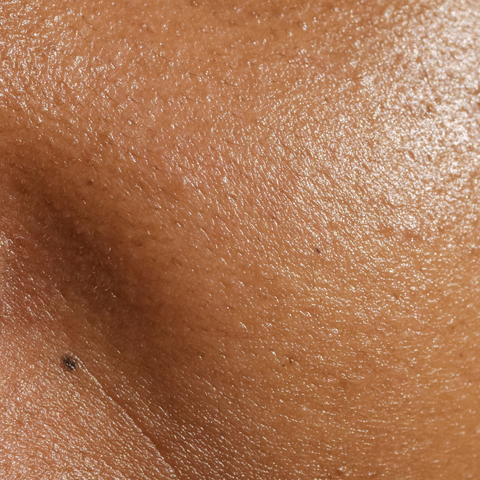
Les peaux grasses ont une production de sébum plus importante, ce qui peut entraîner une accumulation d'huile sur la surface de la peau. Cela peut donner un aspect luisant et contribuer à obstruer les pores, provoquant des irrégularités de texture et de couleur.
- Obstruction des pores
L'excès de sébum associé aux peaux grasses peut conduire à l'obstruction des pores. Lorsque les pores sont obstrués par le sébum, des points noirs, des points blancs et d'autres imperfections peuvent apparaître, affectant ainsi l'uniformité du teint.
- Réaction inflammatoire
Les peaux grasses peuvent être plus sensibles aux inflammations cutanées. Les réactions inflammatoires, qu'elles soient causées par des imperfections, des allergies ou d'autres facteurs, peuvent entraîner des rougeurs et des variations de couleur.
- Brillance excessive
L'excès de sébum peut rendre la peau plus brillante, ce qui peut affecter la perception générale de l'uniformité du teint.
- Peau mixte
La peau mixte combine à la fois des zones sèches et grasses. Il est essentiel de trouver un équilibre en utilisant des produits adaptés aux deux types de peau. Un fond de teint adapté aux peaux mixtes offre une couvrance uniforme sans accentuer les zones sèches ou brillantes.
- Peau sensible
Les peaux sensibles réagissent souvent aux produits chimiques agressifs. Optez pour des fonds de teint hypoallergéniques et non comédogènes, spécialement conçus pour minimiser les risques d'irritation.
Quelle routine de soin pour un teint unifié ?
- Routine pour les peaux sèches
- Nettoyage doux : Utilisez un nettoyant doux et hydratant pour le visage, de préférence sans alcool ni ingrédients irritants. Évitez les nettoyants qui peuvent dessécher davantage la peau. L'huile de noyaux d'abricot est votre amie !
- Hydratation régulière : Utilisez une crème hydratante riche et nourrissante. Optez pour des produits contenant des ingrédients comme l'acide hyaluronique, la glycérine, les céramides et les peptides pour aider à retenir l'humidité.
- Exfoliation douce : Utilisez un exfoliant doux, concentré en acide glycolique ou en acide salicylique une à deux fois par semaine pour éliminer les cellules mortes de la peau. Cela favorise le renouvellement cellulaire et aide à révéler un teint plus lumineux.
- Masques hydratants : Intégrez des masques hydratants à votre routine hebdomadaire pour fournir une hydratation supplémentaire à votre peau. Les masques à base d'ingrédients comme l'aloès, l'huile d'avocat ou le beurre de karité peuvent être bénéfiques.
- Éviter l'exposition au soleil et appliquez une protection solaire quotidienne : Utilisez un écran solaire à large spectre avec un FPS adapté à votre type de peau sèche. La protection solaire est cruciale pour éviter les dommages causés par les rayons UV, qui peuvent accentuer la sécheresse de la peau.
- Maquillage hydratant : Choisissez des produits de maquillage hydratants et non comédogènes. Évitez les produits poudreux qui peuvent accentuer la sécheresse. Les fonds de teint liquides ou crème peuvent être préférables.
- Humidificateur : Utilisez un humidificateur dans votre environnement, en particulier pendant les mois plus secs ou en hiver, pour maintenir une humidité ambiante qui bénéficie à votre peau.

- Nettoyage régulier : utilisez un nettoyant doux matin et soir pour éliminer l'excès de sébum, les impuretés et les cellules mortes de la peau. Choisissez des produits sans savon et non comédogènes.
- Exfoliation : Intégrez un exfoliant à base d'acide salicylique dans votre routine pour éliminer les cellules mortes de la peau, débloquer les pores et améliorer la texture de la peau. Cela peut aider à réduire les irrégularités de la peau.
- Hydratation légère : Même si vous avez une peau grasse, il est essentiel d'utiliser un hydratant léger et non comédogène. L'hydratation aide à maintenir l'équilibre de la peau, renforcer la barrière cutanée et peut même aider à réguler la production de sébum.
- Utilisation de produits matifiants : Choisissez des produits de maquillage et des crèmes hydratantes qui ont des propriétés matifiantes pour réduire la brillance et maintenir un teint plus uniforme.
- Protection solaire quotidienne : Appliquez un écran solaire à large spectre avec un facteur de protection solaire (FPS) adapté à votre type de peau. Cela protège la peau des dommages causés par le soleil et peut aider à prévenir l'hyperpigmentation.
- Maquillage adapté : Utilisez des produits de maquillage non comédogènes, oil-free et conçus spécifiquement pour les peaux grasses. Évitez l'excès de maquillage, car cela peut accentuer la brillance.
- Traitement ciblé des imperfections : Si vous avez des boutons ou des points noirs, utilisez des traitements spécifiques comme des gels ou des crèmes enrichie en acide salicylique et acide glycolique.
Si vous avez une peau mixte avec un teint non unifié, c'est-à-dire une combinaison de zones grasses et sèches, il est important d'adopter une approche équilibrée dans votre routine de soins pour répondre aux besoins spécifiques de chaque zone. Voici quelques conseils pour unifier le teint d'une peau mixte :
- Nettoyage doux : Utilisez un nettoyant doux qui n'élimine pas excessivement les huiles naturelles de la peau. Choisissez des produits adaptés à la fois aux zones grasses et aux zones sèches de votre visage.
- Exfoliation régulière : Intégrez un exfoliant doux dans votre routine une à deux fois par semaine pour éliminer les cellules mortes de la peau et favoriser un teint plus uniforme. Assurez-vous que l'exfoliant est adapté à la fois aux zones grasses et sèches de votre visage.
- Hydratation équilibrée : Utilisez un hydratant léger pour les zones grasses et un hydratant plus riche pour les zones sèches. L'objectif est d'hydrater toutes les parties du visage sans accentuer la brillance excessive sur les zones grasses.
- Protection solaire quotidienne : Appliquez un écran solaire à large spectre avec un FPS adapté à votre type de peau. La protection solaire est cruciale pour prévenir les dommages cutanés et l'hyperpigmentation.
- Maquillage équilibré : Choisissez des produits de maquillage adaptés aux peaux mixtes. Utilisez des fonds de teint et des poudres non comédogènes qui contrôlent la brillance sans dessécher les zones sèches.
- Contrôle de la brillance : Pour les zones plus grasses, utilisez des papiers matifiants ou des poudres absorbantes pour réduire la brillance tout au long de la journée sans affecter les zones sèches.
- Traitements spécifiques : Si vous avez des problèmes spécifiques comme des boutons ou des taches pigmentaires, utilisez des produits ciblés pour traiter ces problèmes sans aggraver la sécheresse ou la brillance.
- Hydratation en profondeur : Pour les zones sèches, envisagez l'utilisation d'un masque hydratant en profondeur une à deux fois par semaine pour restaurer l'hydratation.
- Éviter les produits agressifs : Évitez les produits qui sont trop agressifs, car cela peut aggraver les problèmes spécifiques de chaque zone. Optez pour des produits doux et équilibrants.
Utilisez un fond de teint adapté
Sélectionnez un fond de teint en fonction de votre type de peau et de la couvrance souhaitée. Les fonds de teint liquides, en poudre, ou en crème offrent des options pour tous les goûts.
Pour camoufler les imperfections, utilisez un correcteur adapté à votre couleur de peau. Les anti-cernes peuvent aider à atténuer les cernes et les rougeurs.
Fixez votre fond de teint avec une poudre libre pour une finition durable. Ajoutez une touche de blush pour un teint éclatant.
Évitez les démarcations en choisissant des produits de maquillage qui se fondent harmonieusement avec votre couleur de peau. Assurez-vous de bien estomper les produits pour un résultat naturel.
En conclusion, un teint unifié dépend de la compréhension de votre type de peau et du choix judicieux de produits de maquillage. Suivre une routine de soins adaptée et sélectionner des produits en fonction de votre couleur de peau vous permettra d'obtenir un teint éclatant et naturel. Que vous ayez une peau sèche, grasse, foncée ou claire, il existe des options de maquillage et de soins pour chaque individu. Alors, explorez, expérimentez et trouvez la routine qui convient le mieux à votre peau, pour un teint parfait en toutes circonstances.