Facial oil: Does it really moisturize tight skin?
When your skin feels tight, your first instinct is often to reach for a bottle of oil: a few drops, immediate softness, and the feeling that you’ve finally “nourished” your face. The comfort is real, but it’s based on a misunderstanding. Oil does not provide water, yet it is water that tight, dry skin lacks. And not all oils are created equal: some support the skin’s surface, while others—when applied alone and frequently—can actually weaken it.
Moisturizing isn't the same as greasing
The tight feeling comes from the stratum corneum—the skin’s outermost layer—when it can no longer retain enough water. To help with this, moisturizers use three types of ingredients. Humectants, such as glycerin, attract water and lock it in. Emollients, which are lipids, fill the spaces between cells and soften the skin’s surface. Occlusives form a light film that slows evaporation.
A review published in 2017 in *Clinical Medicine & Research* sums it up clearly: most moisturizers combine these three categories, and it is the combination of humectants and occlusives that enhances the skin’s ability to retain moisture. An oil, on the other hand, belongs to the latter two categories. It softens the skin and slows evaporation, but contains not a single drop of water. When applied to already dry skin, it preserves what little moisture remains, without adding anything. Our article on tight skin in winter explains in detail what cold weather and heating strip away from the skin’s surface.

The Routine — VIBRE PARIS
Not all oils are the same
In 2013, a British research team posed the question in very simple terms. Adult volunteers, with or without a history of eczema, applied a few drops of olive oil to one forearm and sunflower oil to the other, morning and night, for four weeks. The results, published in *Pediatric Dermatology*, showed that olive oil disrupted the cohesion of the stratum corneum and caused mild redness. Sunflower oil, on the other hand, preserved the skin’s surface and improved its hydration. The authors conclude that the notion that all natural oils are good for the skin does not hold up.
The explanation lies in their composition. A review published in 2017 inthe *International Journal of Molecular Sciences* notes that each vegetable oil contains a unique combination of fatty acids, and that these fatty acids do not all act in the same way. Some, such as oleic acid—which is abundant in olive oil—can disrupt the lipids in the skin barrier and make it more permeable. Other oils, with different compositions, seem, on the contrary, to be better suited to the skin barrier.
An oil preserves what the skin already has. It doesn't provide what the skin lacks.
What the Word “Natural” Doesn’t Tell Us
There’s something reassuring about a bottle of pure oil: just one ingredient, nothing to decipher. But oil isn’t a neutral active ingredient. The same magazine points out that the plant’s origin, the method used to extract the oil, and what it contains besides fatty acids all affect how it works on the skin. Two oils with similar names can behave very differently.
That doesn't make oil the enemy. It simply suggests that we shouldn't rely on it to perform a role it can't handle on its own, and that we should be wary of applying cooking oil to our faces every day.
The Right Order: Water First, Then Fats
Effective skincare is all about the sequence. After cleansing, while the skin is still slightly damp, you first apply a product that attracts and binds water, followed by one that locks it in. That’s the whole point of our article on applying cream to damp skin.
If you like the feel of oil, there’s no reason you can’t save a drop to apply last to the driest areas—or mix it into your moisturizer. That’s when it truly comes into its own: a finishing touch, not a step that replaces another. And if your skin turns red or feels warm afterward, it means the oil isn’t right for you.
What Three Simple Steps Can Already Do
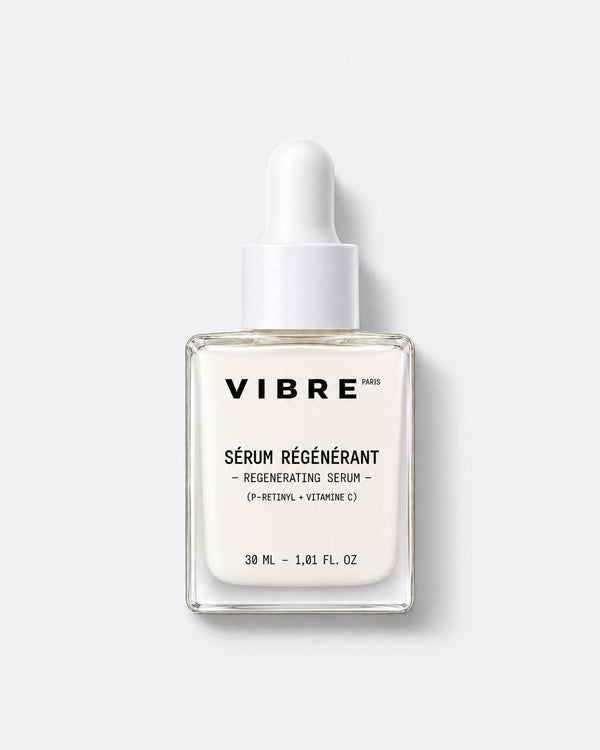
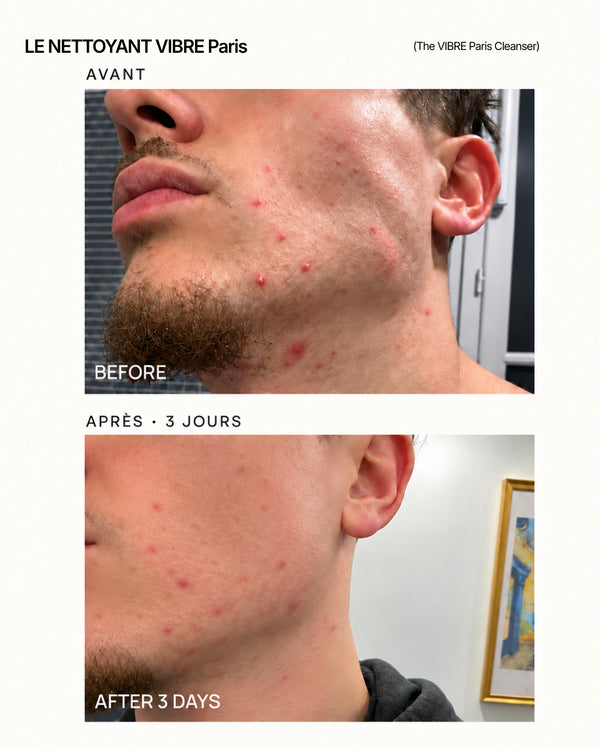
Tight-feeling skin needs, above all, to stop having its natural oils stripped away and to be helped retain its moisture. Both in the evening and in the morning, the Gentle Cleansing Gel removes sebum and impurities without stripping the skin: after rinsing, the skin remains supple. The Regenerating Serum is then applied to skin that’s still damp; its niacinamide helps improve skin texture and radiance.
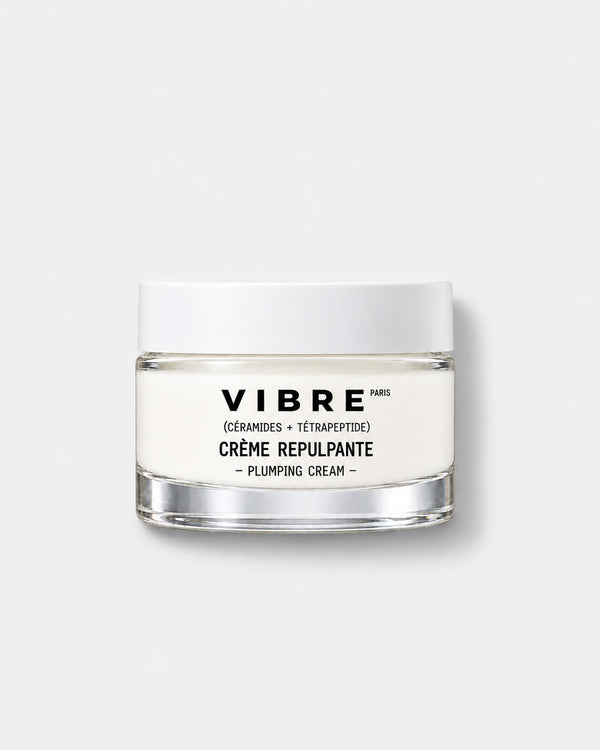
Finally, there’s the Plumping Cream. Whereas an oil provides only lipids, a cream combines an aqueous phase with an oil phase: it delivers moisture and helps it stay. Its multi-ceramides are similar to the lipids the skin produces on its own to build its barrier, and its peptides help maintain firmness.

Plumping Cream — VIBRE PARIS
Three steps, the same every morning and evening: cleanse without stripping the skin, treat, and protect the skin barrier. That’s the whole idea behind La Routine. In the morning, simply add sunscreen.
The oil can stay on the shelf if that makes you happy. But skin that feels tight doesn't need to be greased up—it needs water and something to help it retain it.
Sources
- Danby SG, AlEnezi T, Sultan A, Lavender T, Chittock J, Brown K, Cork MJ. “Effect of olive and sunflower seed oil on the adult skin barrier: implications for neonatal skin care.” Pediatric Dermatology, 2013 — PubMed
- Lin TK, Zhong L, Santiago JL. “Anti-Inflammatory and Skin Barrier Repair Effects of Topical Application of Some Plant Oils.” International Journal of Molecular Sciences, 2017 — PubMed
- Purnamawati S, Indrastuti N, Danarti R, Saefudin T. “The Role of Moisturizers in Addressing Various Kinds of Dermatitis: A Review.” Clinical Medicine & Research, 2017 — PubMed Central